
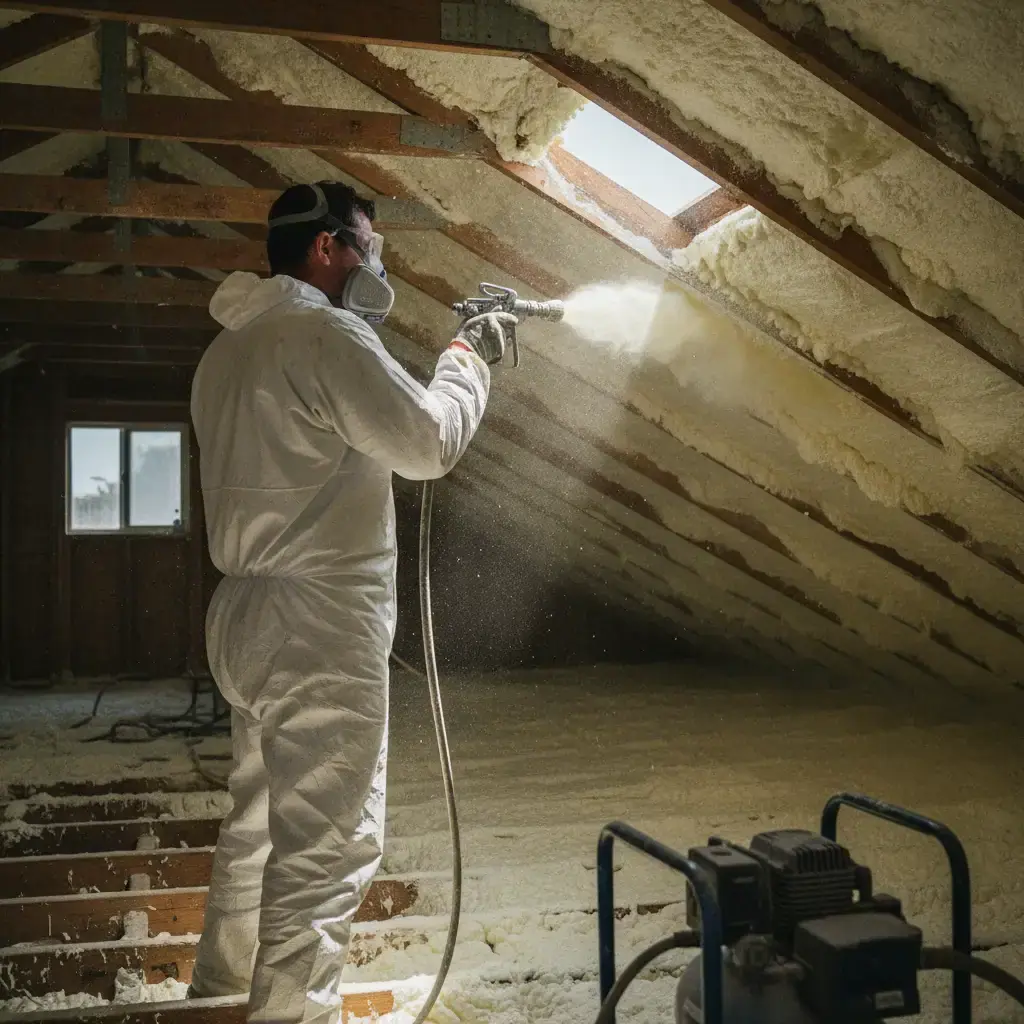
Roof Insulation in Hawthorne, CA
Expert Roof Insulation in Hawthorne, CA — Storm-Tested, Warranty-Backed
Need roof insulation in Hawthorne, CA? Hawthorne Insulation Pros offers expert installation, removal & replacement. Call (424) 449-0089 for a free estimate today.
Roof insulation is a building envelope system that regulates thermal transfer between your home’s interior and the exterior environment by installing insulating materials directly at or beneath the roofline. In Hawthorne, CA — a dense South Bay city bordered by LAX flight corridors, the 105 freeway, and the Pacific Ocean’s marine layer — the demands on roof insulation are uniquely complex. Coastal humidity, periodic Santa Ana wind events driving temperatures above 100°F, and the urban heat island effect concentrated along Hawthorne Boulevard all accelerate insulation degradation and increase energy consumption for residents who go unprotected.
At Hawthorne Insulation Pros, we specialize in roof insulation systems engineered specifically for the South Bay’s climate conditions. Our team delivers precision installations, whether you’re addressing an aging mid-century ranch home in Bodger Park or a newer multi-unit complex near the Del Aire corridor. Call us today at (424) 449-0089 to schedule a free roof insulation assessment.
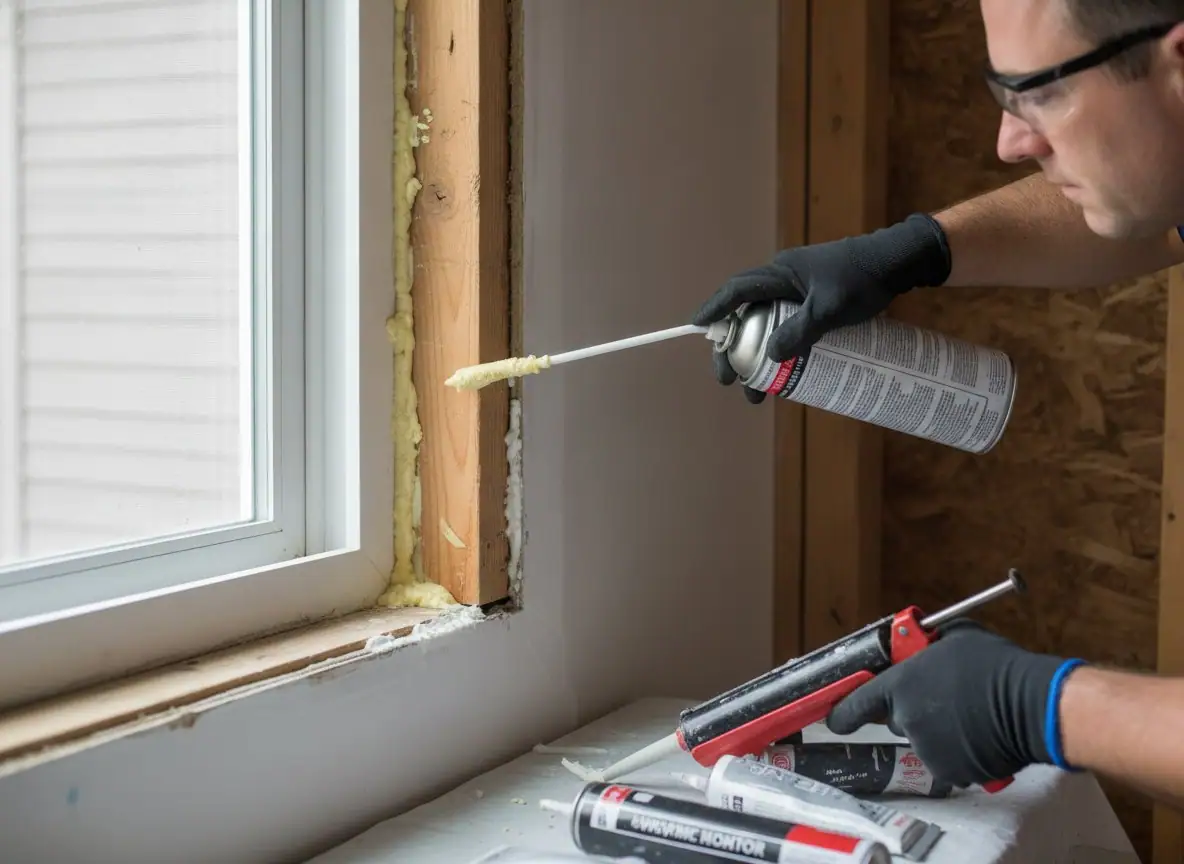
Understanding Roof Insulation in Hawthorne, CA
Roof insulation encompasses any material system installed at the roof deck, rafter bays, or attic floor level to slow the movement of heat between conditioned living spaces and the unconditioned exterior. Unlike wall insulation, roof insulation bears the most intense solar radiation load of any building component, making material selection and installation precision especially critical in sun-intensive Southern California climates.
The concept of intentional building insulation emerged broadly in the United States during the post-World War II construction boom — the same period that defined much of Hawthorne’s residential identity. Hawthorne was incorporated in 1922 and saw explosive housing growth between the 1940s and 1970s as aerospace and manufacturing workers settled near the North American Aviation plant (later Northrop Grumman) and the expanding Los Angeles International Airport. The majority of homes built during this era used minimal insulation by today’s standards — often fiberglass batts with R-values between R-11 and R-19 — far below California’s current Title 24 energy code requirements of R-38 or higher for attic and roof assemblies in Climate Zone 8, which encompasses Hawthorne.
Read moreShow less
Hawthorne’s housing stock is predominantly single-family detached homes, duplexes, and small apartment buildings constructed between 1945 and 1975. These wood-frame structures with composition shingle or flat tar-and-gravel roofs are especially vulnerable to heat gain through poorly insulated or deteriorated roof assemblies. Modern roof insulation systems address this through a combination of materials including spray polyurethane foam, blown-in cellulose or fiberglass, rigid foam board, and reflective radiant barrier systems — each suited to different roof configurations and performance goals.
In Hawthorne specifically, flat-roof construction is common in commercial corridors along Prairie Avenue and Hawthorne Boulevard, while sloped roofs dominate residential neighborhoods like Holly Glen and Bodger Park. Both roof types require different insulation strategies, and our team is trained to assess and address both. Proper roof insulation reduces cooling loads, lowers energy bills, extends roofing material lifespan, and improves overall indoor comfort year-round.
Why Roof Insulation Is Needed in Hawthorne, CA
Marine Layer Thermal Cycling
Hawthorne sits approximately 5.5 miles from the Pacific coastline at Dockweiler State Beach. This proximity subjects the city to the classic Southern California marine layer pattern: cool, humid mornings followed by afternoon sun that burns the overcast away and pushes temperatures into the mid-80s°F during summer months. This daily thermal cycling — sometimes a swing of 25 to 35°F between 7 AM and 2 PM — creates repeated expansion and contraction stress on roofing materials. Insulation that has become compressed, moisture-damaged, or separated from the roof deck loses its ability to buffer these swings, forcing HVAC systems to work harder during afternoon peak demand hours.
Santa Ana Wind Events and Extreme Heat
Hawthorne experiences Santa Ana wind events typically between October and March, during which dry, offshore winds can push local temperatures above 95°F to 105°F within hours. The October 2017 Santa Ana event and the record-breaking September 2020 heat wave, which saw parts of the South Bay exceed 108°F, placed extreme stress on cooling systems across the city. Homes in Hawthorne’s inland neighborhoods — particularly areas east of the 405 freeway near the Ramona neighborhood — recorded some of the highest interior temperature spikes due to inadequate attic and roof insulation acting as a radiant heat sink against the living space below.
Urban Heat Island Effect Along the Hawthorne Boulevard Corridor
The commercial and industrial density along Hawthorne Boulevard, the 105 Century Freeway, and the aerospace facilities near Jack Northrop Avenue creates a measurable urban heat island effect. Asphalt surfaces, low-albedo commercial roofing, and vehicle emissions elevate ambient temperatures in central and eastern Hawthorne by an estimated 4°F to 8°F above surrounding areas during peak summer afternoons. Residential properties within a half-mile of these corridors — including homes in the Bodger Park and Holly Park neighborhoods — are disproportionately impacted and require higher-performing insulation solutions to counteract this elevated thermal load.
Airport Noise and Vibration from LAX Flight Paths
Hawthorne sits directly beneath several active LAX approach and departure flight paths. The resulting acoustic energy and minor structural vibration from frequent aircraft — particularly the heavy widebody jets on the north complex runways — contribute to the gradual mechanical settling and compression of loose-fill insulation products in attic spaces. Blow-in insulation that was originally installed at the California Title 24-required R-38 depth can settle to an effective R-22 to R-28 over 10 to 15 years in high-vibration environments, significantly reducing thermal performance without any visible exterior sign of deterioration.
Aging Housing Stock with Original Insulation
With the median year of construction in Hawthorne falling in the mid-1950s to early 1960s range, a substantial portion of the city’s homes contain original fiberglass batt insulation that is now 50 to 70 years old. At that age, fiberglass batts lose meaningful insulating value due to fiber breakdown, moisture absorption, and pest disturbance. California’s Title 24 energy standards mandate R-38 minimum for Climate Zone 8 attic assemblies, and many Hawthorne homes currently perform at R-11 to R-19 — a deficit that directly translates into hundreds of dollars in unnecessary annual cooling costs.
Free, no-obligation estimates
Talk to Hawthorne Insulation Pros
Tell us what you need and we’ll take it from there.
Signs You Need Roof Insulation Service in Hawthorne
Energy and Comfort Indicators
- Monthly summer electricity bills exceeding $180 to $220 for a typical Hawthorne 1,200–1,600 sq. ft. home
- Rooms on the top floor consistently 5°F or more warmer than lower levels during afternoon hours
- Air conditioning running continuously during moderate 78–82°F outdoor temperatures
- Uneven temperature distribution between rooms sharing the same HVAC zone
Physical Inspection Signs
- Visible gaps, compression, or missing sections in existing attic insulation
- Dark staining or moisture streaks on attic insulation (indicating roof leak infiltration)
- Insulation depth in attic that appears less than 10–11 inches (approximately R-38 equivalent in blown cellulose)
- Ice dams or condensation at roofline during winter cold snaps (rare in Hawthorne but possible during January cold events)
Urgency Indicators
- Rodent or pest activity discovered within attic insulation — immediate removal and replacement required
- Mold or mildew odors emanating from attic access points
- Roof replacement within the past two years without concurrent insulation inspection or upgrade
- Home pre-dates 1978 and has never had a professional insulation assessment
Roof Insulation Methods and Approaches
Spray Foam Insulation
Spray polyurethane foam (SPF) is applied as a liquid that expands to fill cavities, seal air gaps, and create a seamless vapor barrier simultaneously. Open-cell foam (R-3.7 per inch) is suited for interior attic applications in Hawthorne’s mild climate, while closed-cell foam (R-6.5 per inch) is preferred for flat commercial roofs along the Prairie Avenue and Hawthorne Boulevard corridors where moisture resistance is paramount. Explore our spray foam insulation services
Learn moreBlow-In Insulation
Blown-in cellulose or fiberglass is ideal for adding insulation depth to existing attic floors in Hawthorne’s mid-century sloped-roof homes. Cellulose, made from recycled paper treated with borate fire retardant, is particularly effective in the South Bay’s mild climate and can achieve R-38 at approximately 10.5 inches of depth. Learn more about blow-in insulation
Attic Insulation with Radiant Barrier
Given Hawthorne’s intense summer solar gain, we frequently pair blown-in insulation with a foil radiant barrier stapled to the underside of roof rafters. Radiant barriers reflect up to 97% of radiant heat before it can be absorbed into insulation mass, meaningfully reducing peak cooling loads during Santa Ana events. Learn about our attic insulation solutions
Crawl Space Insulation and Encapsulation
Older Hawthorne homes built on raised foundations require crawl space insulation beneath the floor deck and often full encapsulation to control moisture migration from the soil, which is especially relevant given the area’s proximity to the marine layer and periodic El Niño-driven rainfall seasons. View our crawl space insulation services
Learn moreRoof Insulation Cost in Hawthorne, CA
Understanding typical cost ranges helps Hawthorne homeowners budget appropriately and evaluate proposals accurately. Prices reflect the South Bay regional labor market and current material costs as of 2024–2025.
Typical Price Ranges
- Blown-in attic insulation (cellulose or fiberglass): $1.50 to $2.75 per square foot installed. A typical 1,400 sq. ft. Hawthorne home attic costs approximately $2,100 to $3,850 to bring to Title 24 R-38 compliance.
- Spray foam insulation (open-cell, attic application): $3.00 to $5.00 per square foot, totaling $4,200 to $7,000 for a full attic installation.
- Spray foam insulation (closed-cell, flat roof or crawl space): $5.00 to $8.00 per square foot installed.
- Insulation removal and disposal: $1.00 to $2.25 per square foot, depending on contamination level and access difficulty.
- Crawl space encapsulation: $3,500 to $7,500 for a typical Hawthorne raised-foundation home, depending on square footage and moisture remediation needs.
Read moreShow less
Hawthorne-Specific Cost Factors
Labor costs in the South Bay reflect the Los Angeles metro market, running approximately 15–20% higher than the national average. Access challenges in older Hawthorne homes — narrow attic hatches common in 1950s construction, low attic clearances, and flat-roof commercial properties requiring specialized equipment — can add $300 to $800 to project costs. Utility rebates through Southern California Edison’s Energy Upgrade California program can offset $200 to $600 of qualifying insulation project costs for Hawthorne residents. Call (424) 449-0089 for a precise written estimate.
Neighborhoods We Serve in Hawthorne, CA
Bodger Park
One of Hawthorne’s oldest and most established residential districts, Bodger Park features predominantly 1940s and 1950s single-family homes with original shallow attic spaces and minimal existing insulation. Many homes here retain original fiberglass batts at R-11 — well below current code — making them among the highest priority candidates for insulation upgrades in the city.
Holly Glen and Holly Park
These adjacent neighborhoods along the western edge of Hawthorne feature 1960s ranch-style construction with low-slope rooflines that limit attic access. Blow-in insulation with radiant barrier systems is the most effective solution for this housing era and roof configuration. Proximity to the 405 freeway also introduces additional pollutant-related attic contamination considerations.
Ramona Neighborhood (East Hawthorne)
Located east of Hawthorne Boulevard and closer to the 105 freeway interchange, Ramona features a mix of 1960s–1970s residential construction and small multi-family buildings. The urban heat island effect is most pronounced here, making high-performance insulation especially valuable for reducing cooling costs.
Del Aire (North Hawthorne)
Del Aire sits directly beneath primary LAX departure flight paths, making acoustic comfort a secondary benefit of roof insulation upgrades beyond thermal performance. Dense-pack blown-in and spray foam applications provide meaningful noise attenuation alongside energy efficiency improvements for residents in this area.
Roof Insulation Maintenance Tips for Hawthorne Homeowners
- Inspect attic insulation annually — ideally in October before Santa Ana season — checking for settling, moisture staining, or pest disturbance.
- Verify attic ventilation clearance after any insulation work; ensure soffit vents remain unobstructed to prevent moisture buildup during marine layer events.
- Check for roof leaks immediately after any rainfall — even minor El Niño-season rains can introduce moisture that degrades insulation performance rapidly.
- Seal attic access hatches with weatherstripping and add insulated covers to prevent conditioned air loss, especially important during Hawthorne’s summer peak cooling season.
- Schedule pest inspections every two years — roof rats and squirrels are active throughout the South Bay and can tunnel through and contaminate attic insulation.
- Monitor monthly SCE bills — a sudden 15–20% increase in summer electricity costs often indicates insulation settling or damage before physical symptoms are visible.
- After any re-roofing project, request an insulation inspection to confirm the roofing crew did not displace or compress attic insulation during the installation process.
Why Choose Hawthorne Insulation Pros
Hawthorne Insulation Pros is a locally operated insulation company serving Hawthorne and the surrounding South Bay communities. We are not a national franchise dispatching unfamiliar crews — our team knows the specific housing stock, climate patterns, and construction characteristics of Hawthorne’s neighborhoods from Bodger Park to Del Aire.
We are fully trained in California Title 24 energy code compliance for Climate Zone 8 and familiar with the Southern California Edison Energy Upgrade rebate programs available to Hawthorne homeowners. Every project includes a written scope of work, post-installation depth verification, and complete documentation for rebate applications and permit records.
Read moreShow less
We install all major insulation types — spray foam, blown-in, attic systems, crawl space encapsulation, and removal and replacement — giving us the flexibility to recommend the right solution for your specific home rather than pushing a single product. Call (424) 449-0089 to speak with our team today.
FAQ
Frequently Asked Questions — Roof Insulation in Hawthorne, CA
How much does roof insulation cost in Hawthorne, CA?
Most roof and attic insulation projects in Hawthorne range from $2,100 to $7,000 depending on the size of your home, the insulation method selected, and whether old insulation requires removal first. Flat-roof spray foam applications on commercial properties typically run $5.00 to $8.00 per square foot. Call (424) 449-0089 for a free on-site estimate with a written itemized quote.
How long does a roof insulation installation take?
A standard attic blow-in insulation project for a typical 1,200–1,600 sq. ft. Hawthorne home takes 4 to 6 hours including air sealing preparation. Spray foam installations run 6 to 8 hours. Projects requiring prior insulation removal add 2 to 4 hours. Most residential projects are completed in a single day.
What R-value do I need for my Hawthorne home?
California Title 24 energy code for Climate Zone 8 — which includes all of Hawthorne — requires a minimum R-38 for attic and roof assemblies in new construction and substantial renovations. Many Hawthorne homes built before 1980 currently operate at R-11 to R-19, presenting a significant upgrade opportunity for both comfort and energy savings.
Does Hawthorne get cold enough to worry about insulation in winter?
Yes. While Hawthorne’s winters are mild compared to inland Southern California, overnight lows from December through February regularly fall to 45–52°F. Heating costs for under-insulated homes are measurable, and proper roof insulation reduces heating loads just as it does cooling loads. Additionally, January cold snaps can push overnight temperatures into the high 30s°F in some years, at which point roof insulation becomes essential for comfort.
Will roof insulation help with LAX aircraft noise in Hawthorne?
Yes, particularly dense-pack blown-in cellulose and closed-cell spray foam provide meaningful acoustic dampening benefits in addition to thermal performance. Homes in Del Aire and areas beneath primary LAX flight paths often report noticeable interior noise reduction following attic and roof insulation upgrades.
Can I get a rebate for insulation upgrades in Hawthorne?
Yes. Hawthorne residents served by Southern California Edison may qualify for rebates through the Energy Upgrade California program and SCE’s Home Energy Efficiency Rebate initiative, which can offset $200 to $600 on qualifying insulation improvements. We provide all required documentation to support your rebate application.
How do I know if my existing roof insulation needs to be replaced versus topped off?
During our free assessment, we evaluate moisture content, compression, pest damage, and current R-value of existing insulation. If insulation is structurally sound and uncontaminated, we can often add blown-in insulation on top to bring it to current code standards, saving removal costs. If there is mold, pests, moisture damage, or the insulation is older than 40–50 years, full removal and replacement is recommended. Learn about our insulation replacement services
Do you serve both residential and commercial properties in Hawthorne?
Yes. We serve single-family homes, duplexes, apartment buildings, and commercial flat-roof properties throughout Hawthorne. Commercial applications along Hawthorne Boulevard and Prairie Avenue typically use closed-cell spray foam applied directly to the roof deck for maximum moisture resistance and R-value in low-clearance flat-roof configurations.
Get Your Free Roof Insulation Estimate in Hawthorne, CA Today
Whether your Hawthorne home is a 1950s Bodger Park ranch or a newer construction near the Del Aire corridor, Hawthorne Insulation Pros is ready to assess your roof insulation performance and deliver a solution engineered for South Bay conditions. Don’t let another summer pass with an under-insulated roof driving your SCE bills higher month after month.
Call us at (424) 449-0089 to schedule your free, no-obligation on-site assessment. Our team will evaluate your existing insulation, measure current R-values, identify air sealing opportunities, and provide a detailed written proposal — all at no cost to you. Serving Hawthorne’s homeowners and businesses with professional roof insulation installation, removal, and replacement. Contact Hawthorne Insulation Pros today.
Get in touch
Find insulation help near you
Request a free estimate online or give us a call — our team will follow up quickly.
- Call us(424) 449-0089
- Visit4910 W Rosecrans Ave, Hawthorne, CA 90250
- HoursMon-Sun 07:00-19:00