
Batt Insulation in Hawthorne, CA
Energy-Saving Batt Insulation for Hawthorne, CA Homes — Licensed & Insured
Expert batt insulation in Hawthorne, CA. Get R-value upgrades, Title 24 compliance & SCE rebate help. Call Hawthorne Insulation Pros: (424) 449-0089.
Batt insulation consists of pre-cut panels of fibrous material — most commonly fiberglass or mineral wool — designed to fit snugly between wall studs, floor joists, and ceiling rafters. As one of the oldest and most widely used insulation methods in residential construction, batts deliver reliable thermal resistance and sound dampening when properly installed.
In Hawthorne, CA, where coastal marine air pushes in from the Pacific just two miles to the west and summer temperatures routinely climb into the low 90s inland, choosing the right insulation product and R-value matters enormously. Hawthorne’s mix of post-war bungalows, mid-century apartment complexes, and newer infill construction creates a diverse set of installation challenges that demand local expertise.
Read moreShow less
Hawthorne Insulation Pros specializes in batt insulation installation, replacement, and removal across Hawthorne and the surrounding South Bay communities. Our crew understands the city’s unique building stock, coastal climate, and utility-rebate landscape — so every project we complete saves homeowners and landlords real money on Southern California Edison and SoCalGas bills. Call us today at (424) 449-0089 for a free assessment.
Understanding Batt Insulation
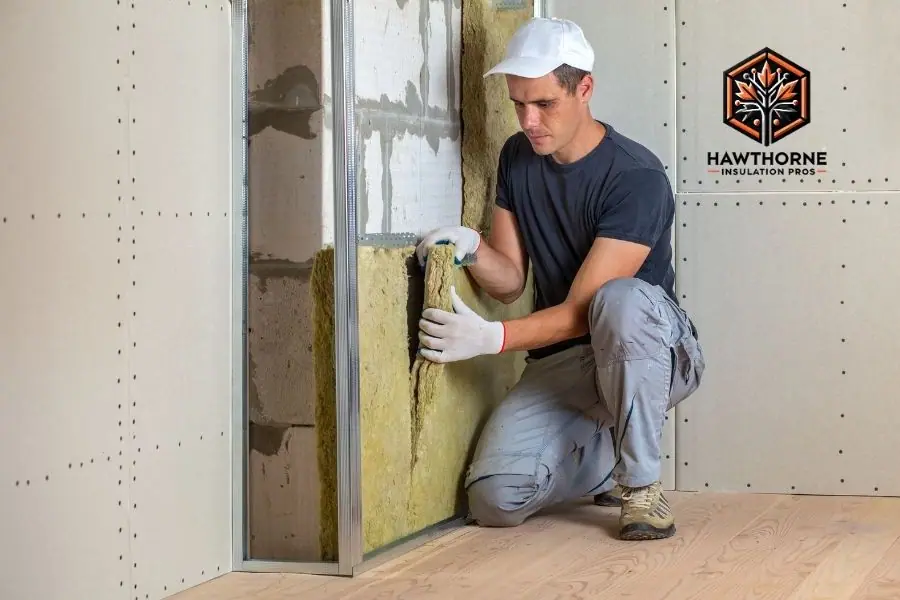
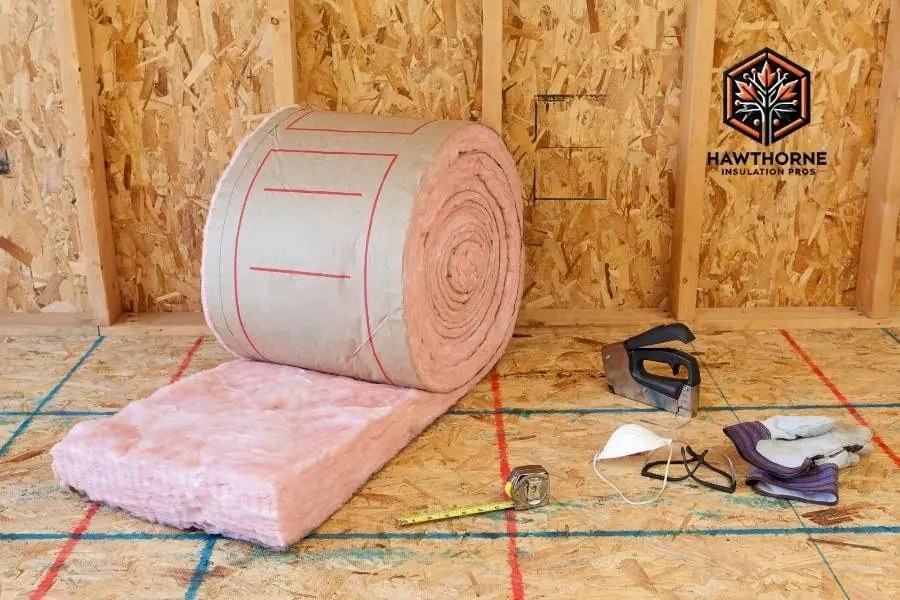
Batt insulation — sometimes called blanket insulation — is manufactured in standard widths of 15 inches and 23 inches to match conventional stud and joist spacing of 16 inches and 24 inches on center. The material is available in a range of R-values, from R-11 (approximately 3.5 inches thick, suitable for 2×4 walls) up to R-38 or higher for attic floors and cathedral ceilings. Faced batts include a kraft-paper or foil vapor retarder on one side, while unfaced batts are used where separate vapor barriers are required or where moisture management calls for a more breathable assembly.
Fiberglass batts have been manufactured commercially since the 1930s and became the dominant insulation choice throughout mid-century American construction. The vast majority of Hawthorne’s housing stock was built between 1940 and 1975, during the city’s rapid growth tied to the nearby Northrop Aircraft plant (now Northrop Grumman) and the development of Los Angeles International Airport’s surrounding industrial corridor. During that era, insulation standards were minimal — California’s Title 24 energy code did not exist until 1978 — meaning walls in older Hawthorne homes were often filled with only R-7 or left entirely empty.
Read moreShow less
Mineral wool (rock wool) batts are a newer alternative gaining popularity in Hawthorne’s renovation market. Mineral wool achieves slightly higher R-values per inch (approximately R-3.7 per inch versus R-3.2 for fiberglass), resists moisture absorption, and provides superior fire resistance — a meaningful advantage in a dense urban environment where homes sit close together.
Batt insulation is appropriate across a wide variety of building types common in Hawthorne: single-family craftsman bungalows in the Holly Glen neighborhood, two-story apartment buildings along Prairie Avenue, stucco-clad duplexes near Yukon Avenue, and commercial tilt-up structures in the city’s industrial zones. Because batts are installed without solvents or pressurized equipment, they can be used in occupied buildings with minimal disruption — an important consideration in Hawthorne’s densely populated residential corridors.
When combined with attic insulation and crawl space insulation, a comprehensive batt-insulation retrofit can reduce a Hawthorne household’s heating and cooling energy consumption by 20–30 percent, according to Department of Energy estimates for Climate Zone 6, the zone that covers the South Bay.
Why Batt Insulation Is Needed in Hawthorne, CA
Coastal Marine Influence and the June Gloom Effect
From May through July, Hawthorne experiences the “June Gloom” marine layer, a dense marine stratum cloud deck that can suppress daytime highs to 65–68°F while holding overnight lows in the mid-50s. This persistent moisture-laden air infiltrates wall cavities through gaps in aging stucco and wood siding, slowly degrading existing fiberglass batts. Studies by Lawrence Berkeley National Laboratory found that fiberglass batts exposed to relative humidity above 70 percent — common in South Bay coastal zones — lose up to 40 percent of their labeled R-value when moisture condenses within the batt fibers.
Santa Ana Wind Events and Rapid Temperature Swings
Every fall and winter, offshore Santa Ana wind events push temperatures in the South Bay from moderate 70s to 95–100°F within 24 to 48 hours while slashing relative humidity below 10 percent. Notable events include the October 2019 Tick Fire–period Santa Ana, which brought temperatures of 97°F to Hawthorne on October 25, 2019, and the January 2021 Santa Ana event that drove temperatures to 91°F in adjacent Lawndale. These extreme thermal swings stress building envelopes: without adequate batt insulation in walls and ceilings, interior temperatures can spike 15–20°F above thermostat set points, forcing HVAC systems to overwork.
Aging Housing Stock and Original R-Value Deficits
According to the City of Hawthorne’s community development data, more than 60 percent of the city’s residential buildings were constructed before 1970. Homes built in the 1950s — particularly in the Bodger Park and Holly Glen neighborhoods — often have 2×4 exterior walls with no insulation or deteriorated R-7 to R-9 batts that have compressed to less than half their original thickness. Title 24 now requires R-15 in 2×4 walls and R-21 in 2×6 walls for Climate Zone 6. Retrofitting with modern R-15 mineral wool or high-density fiberglass batts closes that gap and brings older homes into compliance during permitted remodels.
Aircraft Noise from LAX Flight Paths
Hawthorne sits directly beneath LAX arrival and departure corridors. Neighborhoods north of Imperial Highway — including areas adjacent to Jack Northrop Avenue — experience consistent aircraft noise of 65–70 dB DNL (Day-Night Average Sound Level). Standard fiberglass batts provide a Sound Transmission Class (STC) rating improvement of 4–8 points per wall assembly, while denser mineral wool batts offer STC improvements of 10–14 points. For Hawthorne residents dealing with both thermal and acoustic challenges, mineral wool batt upgrades address both problems simultaneously.
Utility Rate Pressures
Southern California Edison’s residential time-of-use rates reached an average of $0.30–$0.42 per kWh during summer peak hours (4–9 p.m.) in 2024. A Hawthorne home with inadequate wall and ceiling insulation running central air conditioning can consume 18–25 kWh per day during a heat event, translating to $5.40–$10.50 in daily electricity costs. Properly installed R-21 batt insulation in a 1,400-square-foot home’s walls can reduce cooling load by 12–18 percent, saving $180–$420 annually at current rates.
Free, no-obligation estimates
Talk to Hawthorne Insulation Pros
Tell us what you need and we’ll take it from there.
Signs You Need Batt Insulation in Hawthorne
Comfort and Temperature Inconsistency
- Rooms near exterior walls feel noticeably warmer than interior rooms during summer afternoons — a gap of 5°F or more between zones suggests missing or compressed wall insulation.
- Floors above uninsulated crawl spaces feel cold and damp from November through March, even with the heater running.
- Attic-adjacent bedrooms regularly exceed 80°F on days when outdoor temperatures hit 85°F.
Energy and Utility Indicators
- Monthly SoCalGas bills spike 30 percent or more from October to February compared to similar-sized neighboring homes.
- Your HVAC system runs nearly continuously during Santa Ana wind events despite a thermostat set at 74°F.
- A Southern California Edison home energy audit flags your home’s insulation as below Title 24 Climate Zone 6 minimums.
Visual and Physical Symptoms
- Insulation visible in the attic hatch appears yellow-gray, flattened, or water-stained — signs of compressed or moisture-damaged batts.
- Outlet boxes and switch plates on exterior walls feel cold to the touch in winter, indicating missing insulation in adjacent stud bays.
- Pest activity (rodents, silverfish) in wall cavities has dislodged or contaminated existing batts, requiring insulation removal before replacement.
Urgency Indicators
- You are preparing for a permitted addition or remodel — Title 24 compliance requires insulation upgrades in all work areas.
- Your home was built before 1978 and has never had an insulation inspection.
Our process
Our Batt Insulation Process in Hawthorne
- 01
Initial Assessment and Thermal Scan (1–2 Hours)
A Hawthorne Insulation Pros technician visits the property and performs a room-by-room walkthrough combined with an infrared thermal camera scan of exterior walls, ceilings, and floors. In Hawthorne’s older stucco homes, this scan frequently reveals cold spots
- 02
Product Selection and R-Value Specification (Same Day)
Based on the assessment, we specify the appropriate batt product for each building assembly. For Hawthorne’s coastal climate, we typically recommend faced fiberglass batts for conditioned crawl spaces and unfaced mineral wool for exterior walls where moisture
- 03
Preparation and Air Sealing (2–4 Hours)
Before any batt is installed, our crew air-seals all penetrations — electrical boxes, plumbing chases, and top plates — using fire-rated caulk and low-expansion foam. In Hawthorne’s older wood-frame construction, top plates are frequently unsealed, allowing co
- 04
Batt Installation (Half Day to Full Day)
Batts are hand-cut to fit around obstacles including pipes, wiring, and blocking. Our installers are trained to avoid compression — a single inch of compression on an R-19 batt reduces it to the performance of an R-14. In wall cavities, we use friction-fit ins
- 05
Quality Inspection and Verification (1 Hour)
After installation, a lead technician re-scans all treated areas with the infrared camera to confirm uniform coverage with no voids, gaps, or compression. Any deficiencies are corrected before we leave the site.
- 06
Cleanup and Documentation (30 Minutes)
All packaging and cut offcuts are removed and recycled. We provide a written installation summary including product data sheets, installed R-values by zone, and documentation suitable for Title 24 compliance records and Southern California Edison rebate applic
Batt Insulation Methods and Approaches
Standard Fiberglass Batt Installation
The most common and cost-effective approach, standard fiberglass batts (R-11 to R-21) are ideal for open wall cavities during new construction or gut renovations. In Hawthorne’s active remodeling market — where kitchen and bathroom renovations in Bodger Park and Holly Glen frequently open exterior walls — this method delivers reliable performance at accessible price points. Best used where vapor drive is limited and stud spacing is consistent.
High-Density Fiberglass Batt Installation
High-density batts compress a higher R-value into the same stud depth — for example, R-21 in a 2×6 cavity versus standard R-19. In Hawthorne homes where the exterior wall depth cannot be increased (common in pre-1960 construction near the Ramona neighborhood), high-density batts maximize performance without structural modification.
Mineral Wool (Rock Wool) Batt Installation
Mineral wool is semi-rigid, moisture-resistant, and achieves R-15 in a 2×4 cavity. For Hawthorne properties near LAX flight corridors where both thermal and acoustic performance are required, mineral wool delivers STC improvements of 10+ points. It is also the preferred choice for fire-rated wall assemblies in multi-family buildings along Prairie Avenue and Crenshaw Boulevard.
Combination Batt and Spray Foam Hybrid
A thin layer (1–2 inches) of closed-cell spray foam is applied to the exterior sheathing face of a wall cavity before batts are installed. The foam layer acts as both an air barrier and vapor retarder, and the batts provide the remaining R-value. This hybrid approach is particularly effective in Hawthorne’s older coastal-facing walls where moisture infiltration from the marine layer has historically caused batt degradation.
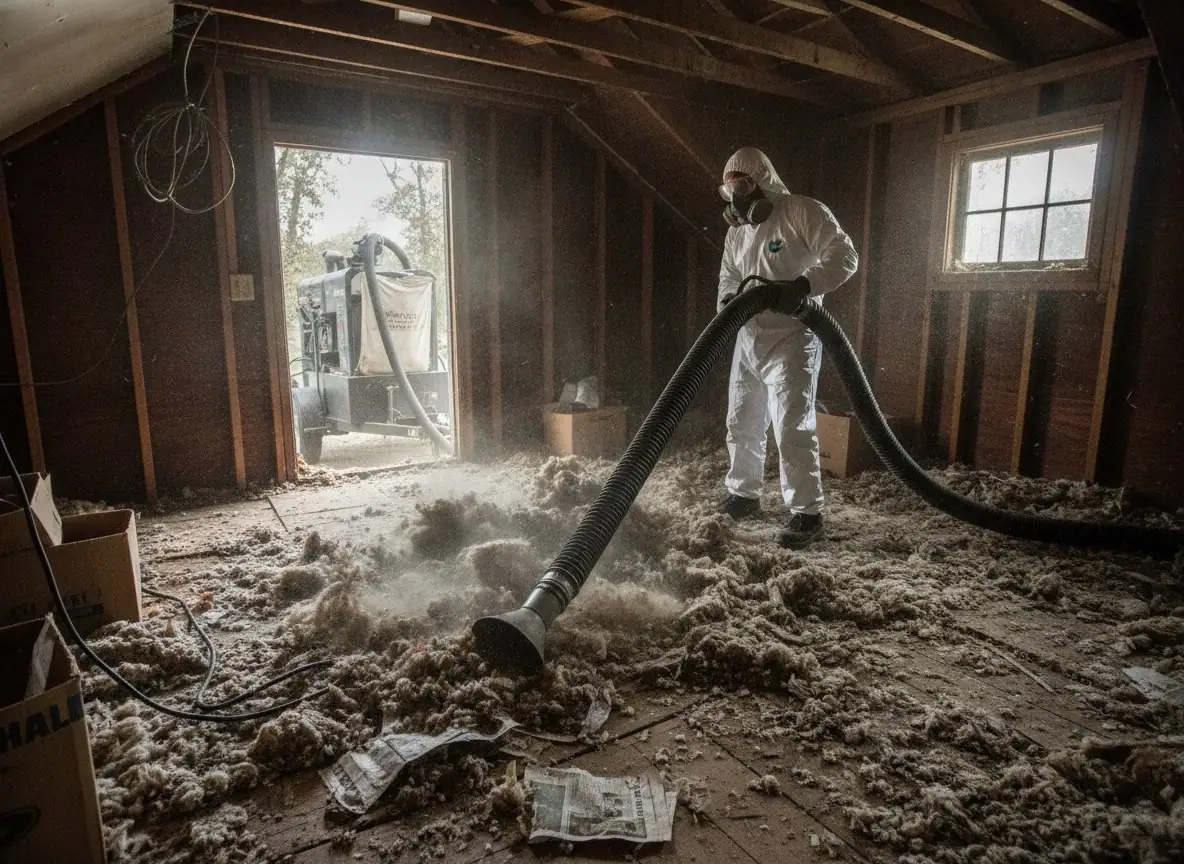
Batt Replacement Following Insulation Removal
When existing batts are water-damaged, rodent-contaminated, or simply degraded beyond useful life, insulation removal is completed first, followed by fresh batt installation. This full-replacement approach is common in Hawthorne’s pre-1970 apartments and rental properties undergoing code compliance upgrades.
Batt Insulation Cost in Hawthorne, CA
Understanding the Batt Insulation in Hawthorne cost helps homeowners and property managers budget accurately and evaluate contractor proposals.
Typical Price Ranges
- Wall batt insulation (open cavities, new construction or full renovation): $0.60–$1.10 per square foot of wall area, or $1,200–$2,800 for a typical 1,200–1,500 sq ft Hawthorne bungalow.
- Attic floor batt insulation (R-30 to R-38): $1.50–$2.50 per square foot; $1,800–$3,750 for a 1,500 sq ft attic floor.
- Crawl space batt insulation (between floor joists): $1.80–$3.00 per square foot; $2,000–$4,500 for a 1,200 sq ft footprint.
- Mineral wool upgrade premium: Add $0.30–$0.60 per square foot over standard fiberglass pricing.
- Insulation removal prior to replacement: $1.00–$2.00 per square foot; see our insulation removal page for full details.
Read moreShow less
Factors That Affect Hawthorne Batt Insulation Pricing
- Accessibility: Attics with less than 24 inches of clearance — common in Hawthorne’s 1950s ranch-style homes — require more labor time.
- Stucco exterior: Hawthorne’s predominant stucco construction limits retrofit wall insulation options; open-cavity installation is most cost-effective during permitted renovations.
- Existing insulation condition: Removal of rodent-damaged or moisture-compromised batts adds $500–$1,500 to project totals.
- Southern California Edison and SoCalGas rebates: Current rebate programs (2024–2025) offer $0.10–$0.25 per square foot for qualifying insulation upgrades, potentially reducing out-of-pocket costs by $300–$900 on a full-home project.
Contact Hawthorne Insulation Pros at (424) 449-0089 for a precise estimate tailored to your property’s specific conditions.
Neighborhoods We Serve in Hawthorne
Holly Glen
Located in the southwestern corner of Hawthorne near El Segundo Boulevard, Holly Glen is characterized by single-family homes built primarily between 1948 and 1965. These wood-frame structures with original single-pane windows and uninsulated 2×4 walls are among the highest-priority retrofit candidates in the city. Batt insulation upgrades here frequently pair with blow-in insulation for inaccessible wall cavities.
Bodger Park
Bodger Park, centered near Bodger Park itself on Ramona Avenue, features a dense mix of 1950s bungalows and early apartment buildings. Many of the two- and four-unit buildings in this neighborhood have shared wall assemblies with no insulation between units — a code and comfort issue that mineral wool batts address effectively.
Hawthorne Industrial and Residential Corridor (Jack Northrop Ave Area)
Homes and apartment complexes within a half-mile of Jack Northrop Avenue face the dual challenge of LAX flight noise and proximity to industrial uses. Mineral wool batt installations in this corridor improve both thermal performance and STC ratings, making interiors substantially quieter.
Prairie Avenue Corridor
The multi-family apartment buildings lining Prairie Avenue between Imperial Highway and Marine Avenue represent Hawthorne’s largest rental housing stock. Many were built in the 1960s and 1970s with minimal insulation and now require insulation replacement to meet current habitability standards and SoCalGas rebate eligibility requirements.
Batt Insulation Maintenance Tips for Hawthorne Homeowners
- Annual attic inspection: Each fall before Santa Ana season, visually inspect accessible attic insulation for signs of compression, displacement, or water staining from roof leaks — a particular concern after winter rain events in Hawthorne.
- Control attic ventilation: Hawthorne’s coastal humidity accelerates moisture accumulation in poorly ventilated attics. Ensure soffit and ridge vents remain unobstructed to maintain airflow and prevent batt degradation.
- Seal penetrations promptly: Any new electrical, plumbing, or cable work that penetrates insulated walls or ceilings should be re-sealed with fire-rated caulk within 30 days to prevent air bypass.
- Monitor for pest activity: Rodents nesting in batt insulation are common in South Bay coastal neighborhoods. Signs of activity require immediate insulation removal and replacement to prevent health hazards.
- Check crawl space moisture: After any significant rainfall (Hawthorne averages 13 inches annually), inspect crawl space vapor barriers and floor-joist batts for moisture intrusion. Pair with crawl space encapsulation for long-term protection.
- Review utility bills annually: A sudden 15–20 percent increase in heating or cooling costs without a rate change often signals insulation failure. Schedule a thermal scan inspection.
- Rebate awareness: Check Southern California Edison’s Residential Energy Efficiency Rebate portal each January — rebate amounts for insulation upgrades are updated annually and can offset future maintenance costs.
Why Choose Hawthorne Insulation Pros
Hawthorne Insulation Pros is a locally operated insulation company focused exclusively on the South Bay community. Unlike national chain contractors who assign crews unfamiliar with the area, our technicians have installed insulation in hundreds of Hawthorne homes — from the post-war bungalows of Holly Glen to the mid-rise apartment buildings along Prairie Avenue. We know where rodent intrusion is most common, which neighborhoods sit in the densest LAX noise corridors, and how Hawthorne’s marine layer affects insulation performance over time.
Our full range of services — including spray foam insulation, attic insulation, blow-in insulation, crawl space encapsulation, crawl space insulation, insulation removal, and insulation replacement — means we can handle every aspect of your building envelope in a single coordinated project.
Read moreShow less
We assist with Southern California Edison and SoCalGas rebate documentation, provide Title 24 compliance records, and stand behind every installation. When you search for Hawthorne Batt Insulation near me, you deserve a contractor who treats your home the way they would treat their own. That is the standard we hold ourselves to on every job.
Call (424) 449-0089 to speak with a Hawthorne insulation specialist today.
FAQ
Frequently Asked Questions About Batt Insulation in Hawthorne, CA
How much does batt insulation cost in Hawthorne, CA?
Most Hawthorne homeowners pay between $1,200 and $3,750 for a full batt insulation project depending on scope. Wall insulation in open cavities runs $0.60–$1.10 per square foot, attic floor insulation costs $1.50–$2.50 per square foot, and crawl space floor-joist insulation ranges from $1.80–$3.00 per square foot. Southern California Edison and SoCalGas rebates can reduce out-of-pocket costs by $300–$900 on qualifying projects.
What R-value does Hawthorne, CA require for wall insulation?
Hawthorne is in California Climate Zone 6. Title 24 requires a minimum of R-13 for 2×4 exterior walls and R-20 for 2×6 walls in new construction and permitted renovations. For attic floors, the minimum is R-30, though we typically recommend R-38 for maximum performance given Hawthorne’s summer heat events.
How long does a batt insulation installation take in Hawthorne?
A standard single-family home (1,200–1,600 sq ft) typically takes one full day — including assessment, air sealing, installation, and final inspection. Larger multi-family properties or projects requiring insulation removal first may take two to three days. We provide a project timeline estimate during the initial assessment.
Can batt insulation reduce LAX flight noise in my Hawthorne home?
Yes. Mineral wool batts installed in exterior walls and ceilings can improve a wall assembly’s Sound Transmission Class (STC) rating by 10–14 points compared to an empty stud bay. For homes in Hawthorne’s LAX noise corridors north of Imperial Highway, a combination of mineral wool batts, interior drywall mass, and window upgrades can reduce perceived interior noise by 50 percent or more.
Is batt insulation or blow-in insulation better for my Hawthorne home?
The right choice depends on access. Batt insulation is ideal for open cavities (new construction, gut renovations, accessible attic floors). Blow-in insulation is better for finished walls with closed cavities and for dense-pack applications where batts cannot be hand-fitted. Many Hawthorne projects use both methods: batts in the attic floor and blow-in in inaccessible wall cavities.
How do I know if my existing batt insulation needs replacement?
Key signs include visible compression or slumping in attic batts, water stains, rodent nesting, musty odors in wall cavities, or a sudden unexplained increase in utility bills. Our infrared thermal scan identifies cold spots and voids in wall assemblies without any destructive investigation. Homes built before 1978 in Hawthorne should receive an inspection if insulation has never been evaluated.
Do you help with Southern California Edison insulation rebates?
Yes. We provide all documentation required for SCE and SoCalGas residential insulation rebate applications, including product data sheets, installed R-value certificates, and contractor identification numbers. We walk every Hawthorne customer through the rebate process at project completion.
Can batt insulation be installed in a Hawthorne home without major renovation?
In accessible areas — attic floors, crawl spaces, and open wall cavities exposed during kitchen or bath remodels — yes, batt insulation can be installed with minimal disruption. For finished exterior walls with no access, we recommend blow-in insulation as the non-invasive alternative, which can be installed through small holes drilled and patched in drywall or stucco.
Get a Free Batt Insulation Estimate in Hawthorne Today
Whether you’re upgrading a 1950s Holly Glen bungalow, retrofitting a Prairie Avenue apartment building, or insulating a new addition, Hawthorne Insulation Pros is ready to help. Our team understands Hawthorne’s climate, building stock, and utility-rebate landscape better than any out-of-area contractor.
Stop overpaying on Southern California Edison and SoCalGas bills. Stop tolerating rooms that are too hot in October or too cold after the marine layer rolls in. A properly installed batt insulation system pays for itself in energy savings, comfort, and home value.
Call us now at (424) 449-0089 to schedule your free on-site assessment. We serve Hawthorne and the surrounding South Bay — and we’re ready to come to you.
Get in touch
Find insulation help near you
Request a free estimate online or give us a call — our team will follow up quickly.
- Call us(424) 449-0089
- Visit4910 W Rosecrans Ave, Hawthorne, CA 90250
- HoursMon-Sun 07:00-19:00