Mineral Wool Insulation in Hawthorne, CA
Energy-Saving Mineral Wool Insulation for Hawthorne, CA Homes — Licensed & Insured
Get expert mineral wool insulation in Hawthorne, CA. Fire-resistant, acoustic-grade installs for LAX noise & coastal humidity. Call (424) 449-0089 for a free estimate.
Mineral wool insulation is a high-performance, fire-resistant insulation material manufactured from natural rock or industrial slag spun into dense, fibrous batts and boards. Unlike fiberglass, mineral wool does not melt or ignite at typical residential fire temperatures, making it one of the safest and most thermally efficient options available to homeowners and commercial property owners in Hawthorne, California.
Hawthorne’s unique coastal proximity, aviation-adjacent noise environment near Los Angeles International Airport, and marine layer climate create specific insulation demands that generic products simply cannot meet. Mineral wool excels in all three areas — delivering superior R-values, outstanding acoustic dampening, and moisture resistance that stands up to the persistent humidity rolling in from the Pacific Ocean just four miles to the west.
Read moreShow less
At Hawthorne Insulation Pros, our team specializes in mineral wool insulation installation across Hawthorne’s diverse housing stock, from mid-century ranch homes in the Bodger Park neighborhood to modern mixed-use developments along Hawthorne Boulevard. Call us today at (424) 449-0089 to speak with a local insulation expert.
Understanding Mineral Wool Insulation
Mineral wool insulation — also marketed under brand names such as Rockwool and Thermafiber — is produced by melting basalt rock, diabase, or blast furnace slag at temperatures exceeding 2,900°F and spinning the molten material into thin fibers. Those fibers are then compressed into batts, rigid boards, or loose-fill products. The result is a material that is approximately 97% inorganic, making it naturally resistant to fire, mold, mildew, and pest infiltration.
The technology dates to the late 19th century, when Danish entrepreneur Thomas Rafn first commercialized slag wool production in 1897. By the mid-20th century, mineral wool had become a standard building material across Scandinavia, Germany, and the United Kingdom. Its adoption in the United States accelerated during the post-World War II housing boom, a period that directly shaped the majority of residential properties currently standing in Hawthorne.
Read moreShow less
Mineral wool achieves R-values of approximately R-3.0 to R-3.3 per inch in batt form and up to R-4.2 per inch in high-density board configurations. This thermal performance surpasses standard fiberglass batts at equivalent thicknesses. More critically for Hawthorne buildings, mineral wool carries a Sound Transmission Class (STC) rating that is typically 4 to 10 points higher than fiberglass alternatives of the same thickness — a meaningful advantage for properties exposed to LAX flight paths overhead.
Mineral wool is hydrophobic, meaning individual fibers repel water rather than absorbing it. In Hawthorne’s climate zone 8 environment, where relative humidity regularly climbs above 80% during summer marine layer events, this characteristic prevents the progressive moisture absorption and thermal degradation that shortens the lifespan of traditional fiberglass insulation in wall cavities and attic spaces.
The material is available in standard 2×4 and 2×6 wall cavity widths, as well as custom thicknesses for attic installations. Its density also allows it to remain in place without sagging inside wall cavities — a problem that affects aged fiberglass insulation in many of Hawthorne’s older residential structures built between 1945 and 1970.
Why Mineral Wool Insulation Is Needed in Hawthorne, CA
The Marine Layer and Pacific Moisture Exposure
Hawthorne sits approximately 4.2 miles east of the Pacific Ocean as the crow flies. The Stratus marine layer that blankets the South Bay region — locally known as “June Gloom” and “May Gray” — persists from May through August and periodically returns in winter months. During peak marine layer months, Hawthorne records morning relative humidity levels consistently above 85% at Hawthorne Municipal Airport weather stations. Standard fiberglass insulation absorbs airborne moisture over time, compressing and losing R-value. Mineral wool’s hydrophobic fiber structure actively repels this moisture, maintaining its rated R-value across the full marine layer season.
LAX Flight Path Noise Penetration
Hawthorne sits directly beneath LAX arrival and departure corridors. The FAA’s LAX Part 150 Noise Compatibility Study has documented Hawthorne neighborhoods including Bodger Park, Del Aire, and the El Camino Village corridor receiving Day-Night Average Sound Levels (DNL) between 65 and 75 decibels — levels that the FAA classifies as incompatible with residential use without acoustic mitigation. Mineral wool installed in exterior walls and attic assemblies provides STC ratings of 45 to 52, reducing interior noise levels by measurable margins that standard fiberglass installations at the same depth cannot match.
Aging Mid-Century Housing Stock
The vast majority of Hawthorne’s single-family homes were constructed between 1945 and 1965 during the postwar aerospace industry expansion that brought workers to Hughes Aircraft Company (located at what is now SpaceX’s headquarters on Jack Northrop Avenue). These homes were built with 2×4 wall framing and either kraft-faced fiberglass batts or no insulation at all. After 60 to 80 years, original insulation in these structures has settled, compressed, and in many cases become contaminated with rodent activity. Retrofitting these wall cavities and attic spaces with mineral wool restores thermal and acoustic performance appropriate to today’s energy standards.
California Title 24 Energy Code Requirements
California’s Title 24 Part 6 Building Energy Efficiency Standards require Climate Zone 8 (which covers Hawthorne) to achieve minimum wall insulation of R-15 in new construction and significant renovation projects. Mineral wool batts for 2×4 cavities deliver R-15 without additional furring or wall assembly modifications, making compliance straightforward for Hawthorne contractors working within existing stud spacing.
Wildfire Risk and Fire Code Compliance
Although Hawthorne itself is not a designated Very High Fire Hazard Severity Zone (VHFHSZ), Los Angeles County’s aggressive FireSafe building standards, tightened following the 2018 Woolsey Fire and the January 2025 Palisades and Eaton fires, have prompted many Hawthorne property owners to upgrade to non-combustible building materials throughout their assemblies. Mineral wool does not sustain combustion and carries an ASTM E136 non-combustibility certification, providing an additional layer of safety that fiberglass and open-cell spray foam cannot match.
Free, no-obligation estimates
Talk to Hawthorne Insulation Pros
Tell us what you need and we’ll take it from there.
Signs You Need Mineral Wool Insulation in Hawthorne
Energy Performance Warning Signs
- Monthly electricity bills from Southern California Edison exceeding $180 to $220 during summer cooling months despite moderate thermostat settings
- Noticeable hot or cold spots along exterior walls, particularly in north-facing rooms during winter Pacific storms
- HVAC system cycling more than 12 times per hour during peak temperature days
- Attic temperatures exceeding 130°F on summer afternoons, indicating inadequate attic insulation depth
Acoustic Performance Warning Signs
- Clearly audible aircraft noise inside bedrooms during typical LAX flight operations between 6 a.m. and 11 p.m.
- Neighbor conversations or street traffic from Hawthorne Boulevard audible inside the home at normal speech levels
- Sound traveling freely between interior rooms or floors in multi-story structures
Existing Insulation Failure Signs
- Visible fiberglass batts sagging or falling away from attic floor joists
- Evidence of rodent tunneling or nesting within existing wall or attic insulation
- Musty or damp odors from wall cavities, indicating moisture-compromised insulation
- Insulation material with visible discoloration, compaction below one-third of original thickness, or friable texture
Urgency Indicators
If your home was built before 1978 and has never had insulation replaced, schedule an inspection immediately. Homes of this vintage in Hawthorne may contain vermiculite or deteriorated fiberglass that poses both health and fire risks.
Our process
Our Mineral Wool Insulation Installation Process in Hawthorne
- 01
Site Assessment and Thermal Imaging (Day 1 — 1 to 2 Hours)
Our technicians arrive with FLIR thermal imaging cameras to map heat loss patterns across your exterior walls, attic deck, and any crawl space assemblies. In Hawthorne’s marine layer climate, we conduct assessments during morning hours when the temperature dif
- 02
Existing Insulation Inspection and Removal Coordination (Day 1 — 30 to 60 Minutes)
We inspect existing insulation material type, depth, and condition. If removal is required — as is common in Hawthorne homes built before 1975 — we coordinate professional insulation removal before mineral wool installation proceeds. This step includes air qua
- 03
Preparation and Air Sealing (Day 1 or Day 2 — 2 to 4 Hours)
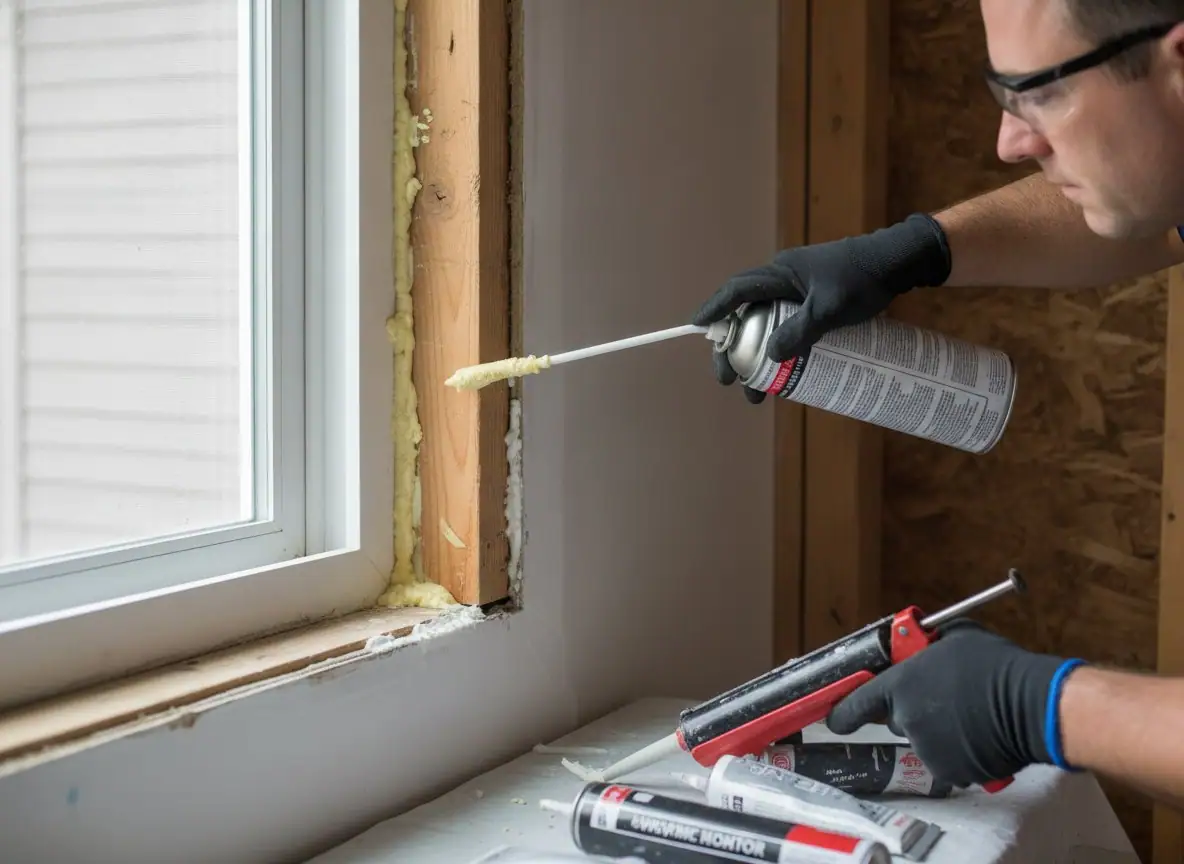
Before any mineral wool is placed, our team seals all penetrations, electrical box gaps, top plates, and rim joists with low-expansion spray foam or acoustical sealant. Air sealing is critical in Hawthorne’s coastal environment, where wind-driven moisture can
- 04
Mineral Wool Batt Installation (Day 2 — 4 to 8 Hours Depending on Square Footage)
We cut and friction-fit mineral wool batts into wall cavities, attic bays, and floor assemblies. Batts are installed without gaps or compression — both of which degrade R-value performance. In Hawthorne’s 2×4 framed homes, we use R-15 batts (3.5-inch depth). F
- 05
Quality Inspection and Thermal Re-imaging (Day 2 — 1 Hour)
After installation, we conduct a follow-up thermal scan to confirm complete coverage with no voids, compression points, or bypasses. Any deficiencies identified are corrected before we leave the property.
- 06
Documentation and Title 24 Certificate (Day 2 — 30 Minutes)
We provide a completed CF1R or CF2R documentation package as required by the California Energy Commission for permitted insulation work, ensuring your Hawthorne building permit closes cleanly.
Mineral Wool Insulation Methods and Approaches
Batt and Roll Installation
The most common method for new construction and open-wall renovations in Hawthorne. Mineral wool batts are friction-fit between studs, joists, and rafters. This approach is ideal for Hawthorne homes undergoing kitchen or bathroom remodels where walls are opened for plumbing or electrical upgrades. Batts require no adhesives or special equipment, allowing installation to proceed quickly in active renovation environments.
Rigid Mineral Wool Board Installation
High-density mineral wool boards (such as Rockwool Comfortboard 80) are applied to the exterior sheathing layer or interior mass walls. This continuous insulation approach eliminates thermal bridging through studs — a meaningful upgrade for Hawthorne’s older homes where 2×4 framing creates thermal bridges that reduce overall wall assembly R-value by 15 to 20 percent. Comfortboard installations pair effectively with spray foam insulation in hybrid assemblies.
Loose-Fill Mineral Wool (Blow-In)
For attic floors with existing framing and no open access, loose-fill mineral wool can be blown in using standard blow-in insulation equipment. This method achieves uniform coverage across irregular framing and around obstacles such as recessed light housings and HVAC equipment — common challenges in Hawthorne’s 1950s ranch home attic configurations.
Crawl Space Application
Mineral wool batts installed between floor joists above crawl spaces pair with crawl space insulation and crawl space encapsulation vapor barriers. In Hawthorne, where soil moisture from winter El Niño precipitation events can elevate crawl space humidity significantly, mineral wool’s moisture resistance makes it preferable to fiberglass in below-floor applications.
Mineral Wool Insulation Cost in Hawthorne, CA
Understanding the cost of mineral wool insulation in Hawthorne helps homeowners and commercial property managers budget accurately for this upgrade. The following figures reflect current Hawthorne and South Bay regional market pricing.
Typical Price Ranges
- Attic mineral wool insulation (batt or blow-in): $1.80 to $3.20 per square foot installed, or $2,700 to $5,800 for a typical 1,500 to 1,800 square foot Hawthorne ranch home attic
- Exterior wall mineral wool batt installation (open wall): $2.50 to $4.00 per square foot installed
- Rigid mineral wool board (exterior continuous insulation): $3.50 to $5.50 per square foot installed
- Crawl space floor joist installation: $2.20 to $3.80 per square foot installed
- Combined attic and wall installation for a typical Hawthorne home: $6,500 to $14,000 depending on square footage and existing conditions
Read moreShow less
Factors That Affect Mineral Wool Insulation Cost in Hawthorne
- Existing insulation removal requirements — insulation removal adds $1.00 to $2.00 per square foot
- Attic accessibility (low-pitch rooflines common in 1950s Hawthorne homes increase labor time)
- Presence of knob-and-tube wiring requiring clearance protocols
- California permit fees through the City of Hawthorne Building and Safety Division (typically $150 to $350 for residential insulation permits)
- Los Angeles County utility rebates through SoCalGas and Southern California Edison can offset $200 to $1,500 of project costs for qualifying upgrades
Contact us at (424) 449-0089 for a precise estimate based on your Hawthorne property’s specific square footage and configuration.
Hawthorne Neighborhoods We Serve
Bodger Park
One of Hawthorne’s most established residential neighborhoods, Bodger Park features predominantly single-family homes built between 1945 and 1960 with original 2×4 wood framing. Many properties retain original fiberglass or no insulation in wall cavities. The neighborhood’s proximity to LAX flight paths makes acoustic-grade mineral wool batts a priority upgrade for residents.
Del Aire
Located in the unincorporated LA County pocket adjacent to Hawthorne’s northeast boundary, Del Aire’s mid-century tract homes share the same construction era challenges as Bodger Park but often fall under county rather than city permitting jurisdiction. Our team is familiar with both permitting pathways.
Holly Glen / El Camino Village
These adjacent communities along the western edge of Hawthorne include a mix of 1960s single-family homes and smaller multi-family apartment buildings. Multi-family structures here benefit significantly from mineral wool’s party wall sound control properties, reducing noise complaints between units.
Hawthorne Boulevard Corridor
Mixed-use and commercial properties along Hawthorne Boulevard from El Segundo Boulevard to 120th Street increasingly require mineral wool rigid board installations to meet current commercial energy codes and achieve Title 24 compliance for tenant improvement permits.
Mineral Wool Insulation Maintenance Tips for Hawthorne Homeowners
- Inspect attic insulation depth annually — Check that blow-in or batt coverage remains at target depth (typically 10 to 12 inches for R-38) and has not been disturbed by HVAC maintenance visits or pest activity.
- Monitor crawl space humidity after winter rain events — Hawthorne receives the majority of its annual 12 inches of rainfall between November and March. Check crawl space moisture levels with a hygrometer after significant rain events to confirm encapsulation barriers remain intact.
- Seal new penetrations promptly — Any new electrical, plumbing, or cable installations that penetrate insulated assemblies should be air-sealed within 30 days to prevent coastal moisture infiltration.
- Check attic ventilation annually — Proper soffit-to-ridge ventilation prevents summer heat buildup that can stress HVAC equipment even when insulation performs correctly.
- Inspect for pest entry points every spring — Hawthorne’s warm climate supports active rodent populations. Check eave gaps, foundation vents, and utility penetrations each spring before nesting season peaks.
- Review energy bills for sudden increases — A 15% or greater increase in SCE monthly billing without a rate change is a practical early indicator of insulation compromise.
- Schedule a professional thermal scan every 7 to 10 years — Thermal imaging identifies developing voids before they result in significant energy loss or moisture damage.
Why Choose Hawthorne Insulation Pros for Mineral Wool Installation
Hawthorne Insulation Pros is a locally rooted insulation contractor serving Hawthorne and the South Bay region. Our technicians have direct, hands-on experience with the specific building types, permitting requirements, and climate conditions that define insulation work in this community — from aging Bodger Park bungalows to commercial properties along Hawthorne Boulevard.
We are familiar with City of Hawthorne Building and Safety Division permit requirements and with Los Angeles County permitting for unincorporated areas such as Del Aire. We handle Title 24 CF2R documentation as part of every permitted project, ensuring your project closes without delays.
Our full service offering means we can address every aspect of your insulation project under one contract: attic insulation, insulation replacement, crawl space encapsulation, and more. We do not subcontract core installation work, so the team you meet during your assessment is the team that installs your insulation.
Call (424) 449-0089 to schedule your Hawthorne property assessment today.
FAQ
Frequently Asked Questions About Mineral Wool Insulation in Hawthorne, CA
How much does mineral wool insulation cost in Hawthorne?
Mineral wool insulation in Hawthorne typically costs between $1.80 and $5.50 per square foot installed, depending on the application type. A full attic installation for a 1,500 square foot Hawthorne ranch home generally runs between $2,700 and $5,800. Wall and crawl space installations add to that total. Southern California Edison and SoCalGas rebate programs can offset $200 to $1,500 of eligible project costs.
Is mineral wool better than fiberglass for Hawthorne homes?
For most Hawthorne properties, yes. Mineral wool’s hydrophobic properties make it more resistant to the marine layer humidity that accelerates fiberglass degradation in coastal Los Angeles. Its higher STC acoustic ratings also provide meaningful sound reduction from LAX aircraft noise — a benefit fiberglass at the same depth cannot match.
Does mineral wool insulation help with LAX airplane noise?
Yes. Mineral wool achieves STC ratings of 45 to 52 in wall assemblies, compared to approximately 39 to 44 for equivalent fiberglass installations. For Hawthorne properties in the 65 to 75 DNL noise contour beneath LAX flight paths — including Bodger Park and the El Camino Village corridor — this acoustic improvement is often the primary motivation for upgrading insulation.
How long does mineral wool insulation installation take in a typical Hawthorne home?
A standard attic-only installation in a 1,500 to 1,800 square foot Hawthorne home is completed in one to two days. Full attic plus wall cavity installations requiring removal of existing insulation typically run three to five business days, including removal, air sealing, and installation phases.
Do I need a permit for mineral wool insulation installation in Hawthorne?
Permits are required for insulation work that accompanies structural, electrical, or HVAC modifications, and for projects subject to Title 24 compliance documentation. Standalone insulation replacement projects in Hawthorne may qualify for a simplified permit or exemption. Our team coordinates all permitting with the City of Hawthorne Building and Safety Division as part of our full-service process.
Can mineral wool insulation be installed in older Hawthorne homes with knob-and-tube wiring?
Knob-and-tube wiring requires specific clearance protocols before insulation of any kind is installed in contact with it. California electrical code requires that knob-and-tube systems be evaluated and, in most cases, replaced or isolated before insulation proceeds. We assess wiring conditions during our initial site inspection and coordinate with licensed electricians when clearance work is required.
What is the R-value requirement for attic insulation in Hawthorne?
Hawthorne falls within California Climate Zone 8. California Title 24 Part 6 requires a minimum attic insulation R-value of R-38 for new construction and qualifying renovation projects in this climate zone. Most Hawthorne homes built before 1980 have original attic insulation well below this threshold, often ranging from R-11 to R-19.
Does Hawthorne Insulation Pros also handle insulation removal before installing mineral wool?
Yes. We offer insulation removal as part of our complete service offering. Old fiberglass, cellulose, or damaged insulation is removed, disposed of properly, and the space is air-sealed before new mineral wool is installed. This full-replacement approach is recommended for Hawthorne homes with insulation more than 20 years old.
Get a Free Mineral Wool Insulation Estimate in Hawthorne Today
If your Hawthorne home is losing energy through inadequate insulation, suffering from LAX flight path noise, or showing signs of aging wall cavity or attic insulation failure, mineral wool insulation is the most effective single upgrade you can make to your building envelope.
Hawthorne Insulation Pros is ready to assess your property, provide a clear and transparent estimate, and complete your installation with full Title 24 documentation. We serve all Hawthorne neighborhoods including Bodger Park, Del Aire, Holly Glen, and the Hawthorne Boulevard corridor.
Call us now at (424) 449-0089 to schedule your free on-site assessment. Our team answers calls Monday through Saturday and can often schedule same-week appointments for Hawthorne property owners.
Get in touch
Find insulation help near you
Request a free estimate online or give us a call — our team will follow up quickly.
- Call us(424) 449-0089
- Visit4910 W Rosecrans Ave, Hawthorne, CA 90250
- HoursMon-Sun 07:00-19:00