Fiberglass Insulation in Hawthorne, CA
Energy-Saving Fiberglass Insulation for Hawthorne, CA Homes — Licensed & Insured
Expert fiberglass insulation in Hawthorne, CA. Attic, wall & blown-in services. Title 24 compliant. Free estimates. Call Hawthorne Insulation Pros: (424) 449-0089.
Fiberglass insulation is one of the most trusted, cost-effective methods of temperature and sound control available to homeowners and business owners in Southern California. Made from fine glass fibers woven into batts, rolls, or loose-fill material, fiberglass insulation creates a thermal barrier that keeps conditioned air inside your building and outdoor heat where it belongs — outside.
In Hawthorne, CA, where the marine layer rolls in from the Pacific Ocean just two miles to the west and summer temperatures regularly climb into the upper 80s and 90s, proper insulation is not a luxury — it is an essential investment. The city’s dense mix of 1940s and 1950s post-war bungalows, mid-century apartment buildings, and modern commercial structures presents a wide range of insulation challenges that require local expertise to address correctly.
Read moreShow less
Hawthorne Insulation Pros brings specialized knowledge of Hawthorne’s building stock, climate conditions, and energy efficiency requirements to every project. Call us today at (424) 449-0089 to schedule your free assessment.
Understanding Fiberglass Insulation
Fiberglass insulation has been a cornerstone of American residential and commercial construction since the 1930s, when Owens-Illinois and Corning Glass Works developed the first commercially viable glass fiber product. By the post-World War II building boom of the late 1940s and early 1950s — the very era that shaped Hawthorne’s residential neighborhoods — fiberglass batt insulation had become the standard material of choice for new home construction across Southern California.
The material works through a simple but effective principle: millions of tiny air pockets trapped between glass fibers resist the transfer of heat. This resistance is measured in R-values, with higher numbers indicating greater insulating power. For climate zones like Hawthorne’s Zone 6 designation under California’s Title 24 energy code, attics require a minimum of R-38, while walls require at least R-13 to R-15 for standard 2×4 framing.
Read moreShow less
Fiberglass insulation comes in several primary forms, each suited to different applications:
- Batts and rolls — Pre-cut panels designed to fit between standard wall studs, floor joists, and attic rafters. Ideal for open-framing applications in new construction or gut renovations.
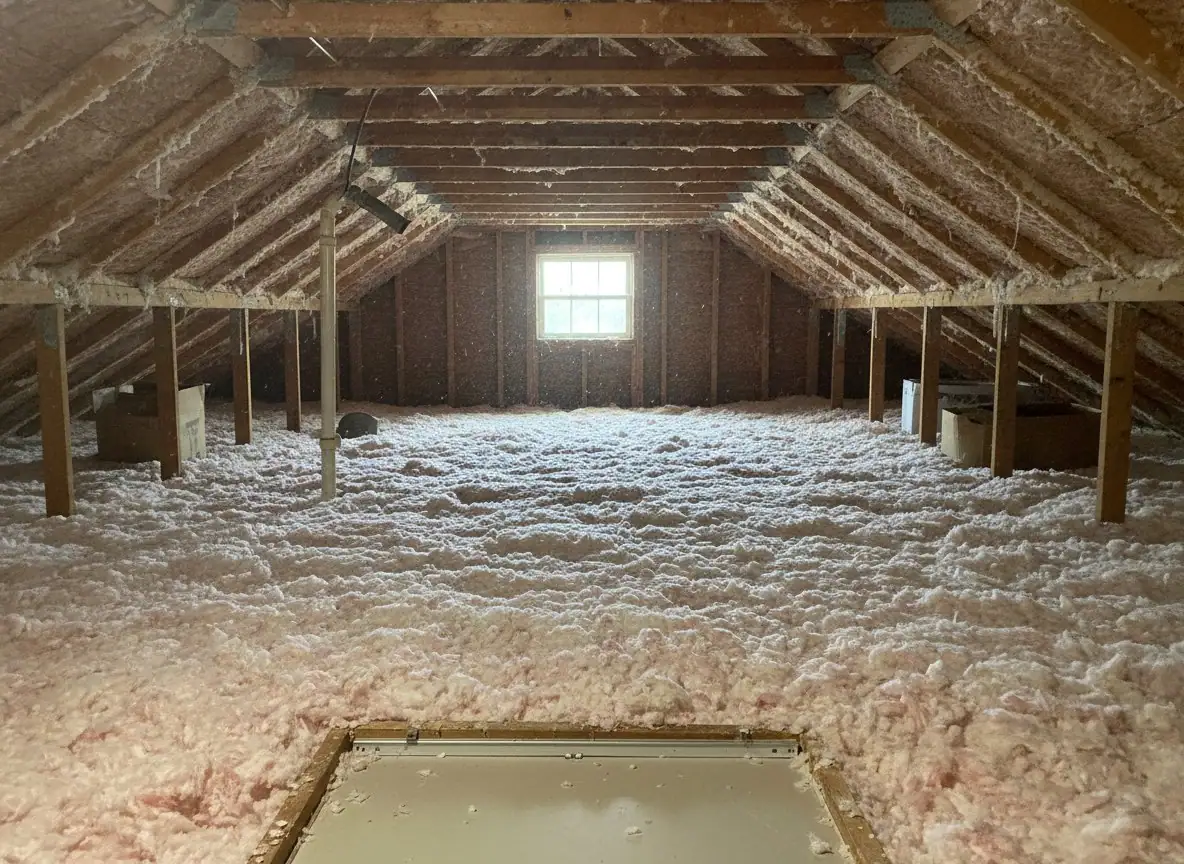
- Loose-fill (blown-in) fiberglass — Small tufts of glass fiber blown into place using specialized equipment, perfect for existing attic floors, enclosed wall cavities, and irregularly shaped spaces.
- Faced fiberglass batts — Batts with a kraft paper or foil vapor retarder attached, used in specific climate applications where moisture management is critical.
In Hawthorne, fiberglass insulation is found in the majority of the city’s approximately 35,000 housing units. The community’s dense concentration of single-family homes built between 1940 and 1970, along with its growing inventory of mixed-use developments near the Hawthorne/Lennox Green Line station, creates consistent demand for insulation installation, replacement, and upgrading. Many of these structures were originally insulated with materials that have degraded over decades or never met modern energy efficiency standards at all.
Understanding which type of fiberglass insulation is appropriate for your specific structure — and ensuring it is installed to current California Title 24 standards — is the foundation of every project Hawthorne Insulation Pros undertakes.
Why Fiberglass Insulation Is Needed in Hawthorne, CA
The Marine Layer Effect
Hawthorne sits approximately 1.8 miles east of the Pacific Ocean shoreline at Manhattan Beach. This proximity means the city experiences the Southern California marine layer — a low-lying stratus cloud formation — for an average of 60 to 90 mornings per year, concentrated between May and September in what locals call “May Gray” and “June Gloom.” Morning relative humidity in Hawthorne regularly reaches 85 to 95 percent during these months. When this moisture-laden air meets poorly insulated attic spaces and wall cavities, it creates conditions favorable to condensation, mold growth, and the gradual degradation of older fiberglass batts. Properly rated vapor-resistant fiberglass insulation mitigates this risk significantly.
Summer Heat and Urban Heat Island Conditions
Despite its coastal proximity, Hawthorne is not immune to inland heat events. During the September 2022 extreme heat event — when Los Angeles County recorded temperatures 20 to 30 degrees above seasonal norms — Hawthorne registered high temperatures between 95°F and 103°F on multiple consecutive days. Homes and apartment units in neighborhoods like Holly Glen and the Bodger Park area that lacked adequate attic insulation saw indoor temperatures exceed 90°F even with air conditioning running, according to resident reports during that event. Upgrading attic insulation to a minimum of R-38, and ideally R-49, dramatically reduces heat transfer through the roof plane during such events.
Aging Building Stock
A significant portion of Hawthorne’s housing inventory was constructed between 1942 and 1965, during and after the wartime industrial expansion centered around the nearby North American Aviation plant on Imperial Highway. Many of these homes were built with minimal or no insulation by modern standards — wall cavities that are completely empty, or attics with degraded 2-inch-thick batts that provide an effective R-value of 6 or less, far below the current California requirement of R-38. Neighborhoods like Ramona neighborhood and the blocks surrounding Hawthorne Boulevard between El Segundo Boulevard and 120th Street contain a high concentration of these under-insulated structures.
Aircraft Noise and Sound Transmission
Hawthorne Municipal Airport (HHR) is located at the western edge of the city, and Los Angeles International Airport (LAX) flight paths pass directly over significant portions of Hawthorne’s residential areas. Homes in the Lawndale-adjacent sections of northwest Hawthorne and neighborhoods beneath LAX’s north runway approach experience sustained noise levels of 65 to 75 decibels during peak flight hours. Dense-pack blown-in fiberglass insulation in wall cavities provides a meaningful 4 to 8 STC (Sound Transmission Class) point improvement, making it a dual-purpose investment for affected residents.
California Energy Code Compliance
California’s Title 24 Part 6 energy code, updated most recently in 2022, imposes strict insulation requirements on any permitted renovation or addition in Hawthorne. Homeowners undertaking kitchen expansions, ADU construction, or HVAC replacements must bring insulation values into compliance, or face failed inspections through the City of Hawthorne Building and Safety Division located at 4455 W. 126th Street. Hawthorne Insulation Pros is fully versed in these code requirements.
Free, no-obligation estimates
Talk to Hawthorne Insulation Pros
Tell us what you need and we’ll take it from there.
Signs You Need Fiberglass Insulation in Hawthorne
Energy and Comfort Indicators
- Monthly SoCalGas or Edison bills that have increased more than 15 percent year-over-year without a corresponding change in usage habits
- Rooms that are noticeably hotter than the rest of the house during summer afternoons, particularly second-floor bedrooms directly below an uninsulated attic
- Air conditioning units that run nearly continuously during Hawthorne’s late-summer heat events without reaching the set thermostat temperature
- Cold floors in the morning, especially in homes with unconditioned crawl spaces beneath the first floor
Physical and Visual Symptoms
- Visible daylight or gaps around attic hatch covers and pull-down stair assemblies
- Existing insulation that is visibly compressed, yellowed, or matted flat — fiberglass that has lost its loft has lost most of its R-value
- Water staining on existing attic insulation batts, indicating past or ongoing moisture intrusion that has compromised the material
- Pest evidence — rodent nesting material woven into insulation batts is common in Hawthorne’s older bungalows and requires full insulation removal before replacement
Urgency Indicators
- Mold or mildew odors in enclosed rooms, particularly after morning marine-layer humidity events
- A permitted construction project that requires Title 24 compliance before the city inspector’s visit
- An HVAC system that is being replaced, which often triggers a code-required insulation evaluation
Our process
Our Fiberglass Insulation Process in Hawthorne
Every fiberglass insulation project completed by Hawthorne Insulation Pros follows a structured, documented process designed to deliver code-compliant results with minimal disruption to your household or business operations.
- 01
Free On-Site Assessment (1–2 Hours)
Our technician visits your Hawthorne property to evaluate existing insulation levels, identify air-sealing deficiencies, check for moisture damage or pest contamination, and document current R-values across all areas. We use a calibrated blower door test where
- 02
Scope and Proposal Development (24–48 Hours)
Based on the site assessment, we prepare a written proposal detailing material specifications, projected R-values, labor scope, and itemized cost. All proposals reference the applicable California Title 24 requirements and City of Hawthorne permitting threshol
- 03
Permit Coordination (1–5 Business Days, If Required)
For projects that meet the City of Hawthorne’s permit thresholds — generally any insulation work associated with a permitted addition or HVAC replacement — we coordinate directly with the Building and Safety Division at 4455 W. 126th Street. We submit all requ
- 04
Existing Insulation Removal (If Required, Half to Full Day)
When existing insulation is contaminated, moisture-damaged, or pest-infested, we perform complete insulation removal using HEPA-filtered vacuum equipment to protect your household’s air quality. All removed material is bagged and disposed of in compliance with
- 05
Air Sealing (1–3 Hours)
Before any new insulation is installed, our technicians seal attic bypasses — penetrations around recessed lights, plumbing stacks, top plates, and electrical chases — using low-expansion spray foam and fire-rated caulk. This step alone can reduce conditioned
- 06
Insulation Installation (Half Day to Full Day)
Fiberglass batts are cut and fitted precisely between framing members. Blown-in fiberglass is applied to the specified depth using calibrated equipment, with depth rulers installed every 100 square feet to verify compliance during inspection. All work is docum
- 07
Final Inspection and Walkthrough (30–60 Minutes)
Our project lead walks through the completed work with you, confirming installed R-values, reviewing any permit inspection requirements, and answering questions about maintenance. You receive a written completion summary for your home improvement records.
Fiberglass Insulation Methods We Use in Hawthorne
Batt and Roll Installation
The most widely used method for new construction and open-framing renovation projects. Pre-cut fiberglass batts are installed between studs, joists, and rafters. In Hawthorne’s post-war bungalows with standard 2×4 wall framing, R-15 high-density batts are used to maximize R-value within the available cavity depth. This method is also our standard approach for attic insulation in homes where the existing framing is accessible and undamaged.
Blown-In Fiberglass (Loose-Fill)
Loose-fill fiberglass is the preferred method for existing attic floors, enclosed wall cavities in occupied homes, and irregularly framed spaces. This method, also called blow-in insulation, allows us to achieve complete, gap-free coverage without opening finished walls. It is particularly effective in Hawthorne’s mid-century apartment buildings, where drilling small access holes and blowing fiberglass into wall cavities causes minimal disruption to tenants.
Dense-Pack Fiberglass for Walls
For existing closed wall cavities — walls that are finished on both sides — we use a dense-pack technique that installs fiberglass at 1.8 to 2.0 pounds per cubic foot, significantly higher than standard loose-fill density. This density prevents settling and, importantly, provides the 4 to 8 STC point acoustic improvement that benefits Hawthorne homeowners living beneath LAX flight paths near Jack Northrop Avenue and Crenshaw Boulevard.
Combination Insulation Systems
Some Hawthorne properties benefit from pairing fiberglass with spray foam insulation — typically using two to three inches of closed-cell spray foam at the roof deck to address condensation risk at the Hawthorne Municipal Airport-adjacent western neighborhoods, with blown-in fiberglass added above it for R-value depth. This hybrid approach is referenced in California Energy Commission guidance for climate zones with significant diurnal humidity swings.
Fiberglass Insulation Cost in Hawthorne, CA
Understanding the Fiberglass Insulation in Hawthorne, CA cost is an important first step in planning your project. Hawthorne Insulation Pros provides free itemized estimates, and the information below reflects current market pricing for the Hawthorne and South Bay service area.
Typical Price Ranges
- Attic insulation (blown-in fiberglass to R-38): $1.50 to $2.50 per square foot, or approximately $1,800 to $3,500 for a typical 1,400-square-foot Hawthorne bungalow attic footprint
- Attic insulation upgrade to R-49: $2.00 to $3.00 per square foot, recommended for homes directly beneath LAX departure patterns where radiant heat from jet exhaust contributes to elevated roof temperatures
- Wall cavity dense-pack (existing closed walls): $2.00 to $4.00 per square foot of wall area, depending on access complexity
- Batt installation in open framing (new construction or gut renovation): $0.75 to $1.50 per square foot
- Full insulation removal before replacement: $1.00 to $2.00 per square foot; see our insulation removal page for detail
- Crawl space insulation: $3.00 to $5.00 per square foot; our crawl space insulation service includes vapor barrier installation where required
Read moreShow less
Hawthorne-Specific Cost Factors
Several local factors influence final project pricing in Hawthorne. Permit fees through the City of Hawthorne Building and Safety Division add approximately $150 to $400 for projects requiring permits. Access difficulty in homes with low-pitch roofs — common in the Ramona and Bodger Park neighborhoods — adds labor time compared to homes with standard attic clearance. Homes near Hawthorne Municipal Airport that require acoustic insulation upgrades typically carry a 15 to 20 percent premium for dense-pack wall work. Los Angeles County labor rates are generally 10 to 15 percent above the California state average, which is reflected in South Bay market pricing.
Call (424) 449-0089 to schedule your free, no-obligation estimate.
Neighborhoods We Serve in Hawthorne
Holly Glen
This quiet residential enclave in northwest Hawthorne features a dense concentration of 1950s and early 1960s ranch-style homes. Many of these properties have original wall insulation — or none at all — and attic assemblies that fall well below current R-38 minimums. Holly Glen homeowners frequently contact us for combined attic and wall insulation upgrades as part of whole-home energy efficiency projects.
Bodger Park
Located in the northeastern section of Hawthorne, Bodger Park contains a mix of original post-war bungalows and 1970s infill construction. The neighborhood’s mature tree canopy creates favorable shade conditions, but also contributes to moisture retention in attic spaces during marine-layer events. Blown-in fiberglass with proper ventilation baffles is our standard recommendation here.
Ramona Neighborhood
Centered along Prairie Avenue south of El Segundo Boulevard, the Ramona area is one of Hawthorne’s most densely developed residential districts. Its aging apartment buildings — many built in the 1960s with minimal wall insulation — are strong candidates for our non-invasive dense-pack blown-in fiberglass service, which upgrades insulation without displacing tenants.
Downtown Hawthorne Corridor
The commercial and mixed-use corridor along Hawthorne Boulevard presents unique challenges for commercial building insulation, including retrofit requirements associated with the Green Line station transit-oriented development projects completed in recent years.
Fiberglass Insulation Maintenance Tips for Hawthorne Homeowners
- Inspect your attic annually — Schedule a visual check each October, before Hawthorne’s rainy season begins, to confirm insulation is still lofted, dry, and free of pest activity.
- Seal attic hatch edges — The pull-down stair or access hatch is one of the single largest air-leakage points in most Hawthorne homes. Add weatherstripping and a rigid foam cover annually.
- Monitor bathroom and kitchen exhaust fans — Ensure they vent to the exterior, not into the attic space, where moisture discharge will saturate and degrade fiberglass insulation over time.
- Check for roof leaks after winter storms — Even minor roof leaks can wet fiberglass batts, which lose R-value when saturated and may grow mold. Inspect after any significant rainfall event.
- Keep attic ventilation clear — Do not block soffit vents with insulation. Install proper baffles during any insulation work to maintain the 1-inch minimum air channel required along the roof deck.
- Watch for rodent entry points — Hawthorne’s urban environment makes roof rat intrusion into attic spaces common. Seal fascia gaps and roof penetrations to prevent nesting in your insulation.
- Schedule a professional re-inspection every five to seven years — Fiberglass insulation can settle and compress over time, particularly in homes subject to the vibration from LAX and Hawthorne Municipal Airport traffic overhead.
Why Choose Hawthorne Insulation Pros
Hawthorne Insulation Pros is a locally focused insulation contractor serving Hawthorne and the South Bay with deep familiarity with the city’s building stock, climate conditions, and regulatory environment. We are not a national franchise that applies generic solutions — every recommendation we make is grounded in the specific construction characteristics of Hawthorne’s post-war bungalows, its mid-century apartment buildings, and its newer mixed-use developments.
We are fully versed in California Title 24 Part 6 compliance requirements and work directly with the City of Hawthorne Building and Safety Division on all permitted projects. Our team is trained in the full range of insulation services Hawthorne homeowners need: insulation installation, spray foam insulation, attic insulation, blow-in insulation, crawl space encapsulation, crawl space insulation, insulation removal, and insulation replacement.
We provide free on-site assessments with no pressure to commit. Every proposal is itemized and transparent. Call (424) 449-0089 to speak directly with a Hawthorne insulation specialist today.
FAQ
Frequently Asked Questions: Fiberglass Insulation in Hawthorne, CA
How much does fiberglass insulation cost in Hawthorne, CA?
Most Hawthorne homeowners pay between $1,800 and $4,500 for a complete attic fiberglass insulation upgrade, depending on square footage, current insulation levels, and whether removal of existing material is required. Wall cavity dense-pack projects for a typical Hawthorne bungalow range from $2,500 to $6,000. We provide free, itemized estimates so you know exactly what you are paying for before any work begins. Call (424) 449-0089 to schedule yours.
How long does fiberglass insulation installation take in Hawthorne?
A standard attic blown-in fiberglass installation in a 1,200 to 1,600 square foot Hawthorne home typically takes four to six hours on installation day. Full projects that include insulation removal, air sealing, and replacement may span one to two days. We schedule most residential projects to be completed within a single business day to minimize household disruption.
Do I need a permit for fiberglass insulation in Hawthorne?
Standalone insulation projects — such as adding blown-in fiberglass to an existing attic — typically do not require a permit from the City of Hawthorne Building and Safety Division. However, insulation work that is part of a permitted HVAC replacement, addition, or ADU project is subject to Title 24 compliance inspection. We will identify permit requirements during your free assessment and handle coordination on your behalf for any project that does require a permit.
What R-value do I need for my Hawthorne home’s attic?
California’s Title 24 energy code designates Hawthorne in Climate Zone 6, which requires a minimum of R-38 in attic assemblies. For homes with significant exposure to the Hawthorne and LAX flight corridors — where radiant heat from air traffic and direct summer sun combine — we recommend upgrading to R-49 for optimal performance and comfort during extreme heat events like those recorded in September 2022.
Is fiberglass insulation safe for my family and pets?
Installed fiberglass insulation poses no ongoing health risk to occupants. During installation, our technicians wear appropriate protective equipment, and we take precautions to isolate the work area from living spaces. Modern fiberglass products used by Hawthorne Insulation Pros are GREENGUARD Gold certified, meaning they meet strict emissions standards for indoor air quality.
How do I know if my existing fiberglass insulation needs replacement?
Key signs in Hawthorne homes include visibly flattened or compressed batts that have lost their loft, water staining from past roof leaks, rodent nesting material embedded in the insulation, or simply an installation date that predates 1990 — at which point the material is likely underperforming relative to current standards. Our free assessment includes a documented evaluation of your existing insulation’s condition and effective R-value.
Can fiberglass insulation reduce aircraft noise from LAX and Hawthorne Airport?
Yes. Dense-pack blown-in fiberglass in wall cavities provides a 4 to 8 STC point improvement in sound attenuation — a meaningful reduction in the 65 to 75 decibel noise levels experienced in Hawthorne neighborhoods beneath LAX approach and departure paths. For maximum acoustic benefit, wall insulation is most effective when combined with upgraded window glazing and door weatherstripping.
Do you offer crawl space insulation services in Hawthorne?
Yes. Our crawl space insulation and crawl space encapsulation services address the unique moisture and thermal challenges of Hawthorne homes with raised foundations — which are common in the city’s pre-1960 bungalow stock. Crawl space insulation prevents cold floors in winter and helps manage the elevated moisture levels associated with Hawthorne’s marine-influenced climate.
Get Your Free Fiberglass Insulation Estimate in Hawthorne Today
If you are ready to improve your home’s comfort, reduce your SoCal Edison and SoCalGas bills, and bring your Hawthorne property into California Title 24 compliance, Hawthorne Insulation Pros is ready to help. We serve all of Hawthorne — from Holly Glen and Bodger Park to the Ramona neighborhood and the Hawthorne Boulevard corridor — with honest assessments and quality fiberglass insulation installation performed by experienced local technicians.
There is no cost and no obligation for your on-site evaluation. Call us today at (424) 449-0089 to speak with a fiberglass insulation specialist, or use our online form to request your free estimate at a time that works for your schedule. We look forward to helping you make your Hawthorne home more efficient, comfortable, and code-compliant.
Get in touch
Find insulation help near you
Request a free estimate online or give us a call — our team will follow up quickly.
- Call us(424) 449-0089
- Visit4910 W Rosecrans Ave, Hawthorne, CA 90250
- HoursMon-Sun 07:00-19:00